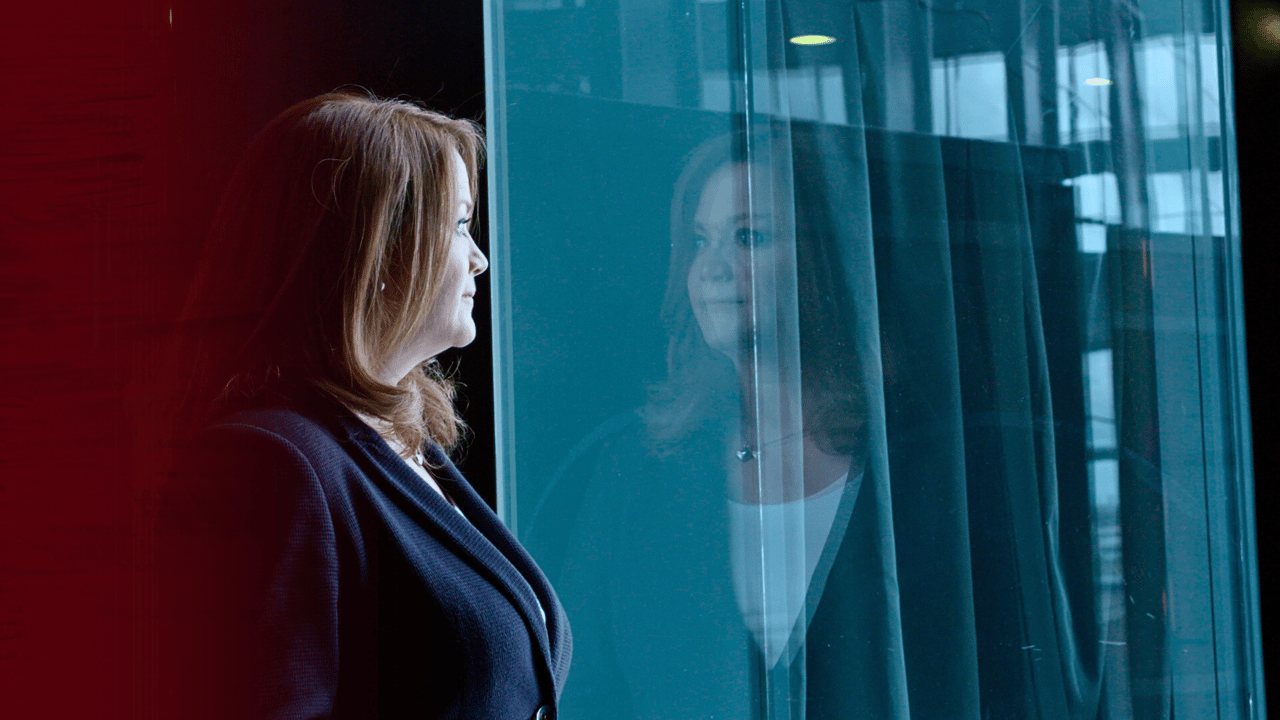
‘I was worried for my child’s safety’: Kate Kniveton tells of her five-year family court ordeal
Former MP reveals that a lawyer advised against keeping her child away from her abusive ex-husband
A former MP who was raped by her ex-husband was advised that the family court would “take a dim view” if she tried to prevent him seeing their child.
Kate Kniveton said that at the outset of proceedings her first solicitor recommended she allow contact between her toddler and former Conservative minister Andrew Griffiths, who she had left after suffering a decade of violence and abuse.
The family court went on to make 14 findings against Griffiths including attempted strangulation and rape. The case was made public in 2021 after two journalists won a landmark ruling to publish the details, and he was eventually barred from having direct contact with his child. Griffiths denies the allegations.
Speaking on a documentary airing on Sunday night, Kniveton said she was advised by her initial solicitor to maintain contact between her child and Griffiths. She was told this was to avoid being accused of “parental alienation” – the idea that a child has been turned against one parent by the other.
She later told the Bureau of Investigative Journalism (TBIJ): “I took the advice because it was all new to me and I was scared of how a judge would view it if I stopped him seeing [their child]. But I was worried about my child’s safety because he is a risk – and not just to me.”
On one occasion when the baby was crying, Griffiths screamed at the weeks-old infant to “shut the fuck up”.
Kniveton said that after their separation, Griffiths used the contact sessions to pressure her to return to him and to say publicly that she supported him, rather than using the time to focus on their child.

He would “erupt” during contact visits and behave aggressively towards her relatives, she said. This behaviour led the same solicitor to advise that the meetings should move to being supervised in a contact centre.
Kniveton said that encouraging contact was the wrong advice but she could understand why the solicitor had initially given it.
In recent years there has been a growing trend of parental alienation being used as a counter-allegation by men accused of domestic abuse. In numerous instances, mothers accused of parental alienation have had their children removed by the family courts.
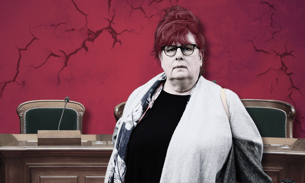
Family barrister Charlotte Proudman, who represented Kniveton in court, says parental alienation is used as a “weapon and a legal tactic” day in, day out in the family courts.
“I’ve seen cases where there have been findings of domestic abuse and then the father has alleged alienation at that point,” she told the documentary. “And I’ve seen children being moved from living with their victim parent to being put with their perpetrator parent.”
“Children are being put with abusive, dangerous parents […] because there is a pro-contact culture at all costs.”


This “pro-contact culture” has been blamed, in part, on the legal presumption that it is in the best interests of children to have contact with both parents. (There is a caveat that says it shouldn’t apply if a child is at risk of harm, but critics claim judges are disregarding it.)
Kniveton and others are campaigning to repeal this legislation. “Judges are going by the law and the law is wrong,” she told TBIJ.
Last year TBIJ won a legal battle to name serial sex offender Kristoffer White, who had been granted unsupervised access to his daughter by the family court. The girl’s mother – who he had accused of parental alienation – managed to overturn the decision on appeal and the court later stripped White of his parental responsibility.
Proudman told the documentary: “I think the state has blood on its hands when they are ordering children and parents to have contact with dangerous men, because we know the consequences of that. Children have been killed on the family court’s watch. And some of those judges are still sitting.”
A report published last month by Women’s Aid detailed how 19 children had been killed over nine years by adults who had been allowed contact with them despite a history of violence.
The previous government undertook a review of the presumption of parental involvement in 2020 which was passed onto Labour when the party came to power. The Ministry of Justice has told TBIJ that it intends to publish its findings “shortly”.
Five-year ordeal
To the outside world it looked like Kniveton and Griffiths had the perfect relationship. But behind closed doors Griffiths was “violent, controlling and unpredictable,” she told the filmmakers.
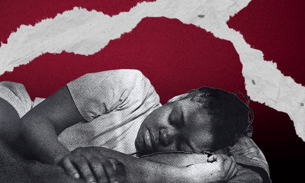
Kniveton was coercively controlled, physically assaulted, spat on and raped in her sleep.
“People don’t think it can happen to middle-class, professional people. Domestic abuse has no boundaries,” she said.
It was when Griffiths’ career imploded in a sexting scandal that she took the chance to leave him. He was a junior minister, for small business, in 2018 when it became public that he had sent thousands of explicit messages to two female constituents.
He resigned from his ministerial position but remained MP for Burton, in Staffordshire, until the following year’s election when Kniveton was approached to stand against him and won the parliamentary seat.
In 2019 Griffiths applied to the family court to have more time with his child. Like any parent going through family court proceedings, Kniveton was not allowed to talk about her case. Proceedings are heard in private.
But when journalists Louise Tickle and Brian Farmer found out about her case and sought permission to report on the details, Kniveton supported their application, waiving her right to anonymity as a survivor of rape.
“I think the state has blood on its hands when they are ordering children and parents to have contact with dangerous men”
An appeal judge ruled in favour of the publication of a “fact finding” judgment into the couple’s relationship, which detailed years of abuse and controlling behaviour. At the final hearing, Griffiths accepted all the findings except that of rape, which he has always denied.
However, when asked to respond to the documentary he told ITV: “I have always denied the allegations made. The family court has a much lower burden of proof and has always been private and confidential. The family court has failed our child […]”
He added: “I fought to remain in my child’s life and to protect them [...] Publication of salacious allegations can only harm the children. Every child has the right to both parents in their lives. I will never stop fighting to be father to my child and to demonstrate to them just how much I love them.”
In February 2024, after five years of court proceedings, a final judgment ruled that Griffiths could not have direct contact with his child. A high court judge made a three-year barring order making it harder for Griffiths to make further applications to the court.
But Kniveton says, while her child is safe for now, there are no guarantees that their ordeal is over.
“We are halfway through the barring order now,” she told TBIJ. “In 18 months, he could come back again [to apply for contact] despite all those findings against him. That’s hanging over me.”
Breaking the Silence: Kate’s Story will air on Sunday 20th July on ITV at 10.20pm
Header image: Kate Kniveton
Reporter: Hannah Summers
Bureau Local editor: Gareth Davies
Deputy editor: Chrissie Giles
Editor: Franz Wild
Fact checker: Ero Partsakoulaki
Production: Alex Hess and Frankie Goodway
TBIJ has a number of funders, a full list of which can be found here. None of our funders have any influence over editorial decisions or output.