A social media ban for under-16s would be popular. But would it actually help?
A proposed ban is looking increasingly likely – yet it would come with tricky implications

The discussion on my neighbourhood WhatsApp group is usually spectacularly vanilla. Pot holes. Bin collections. Road works.
But last weekend something interesting happened. A petition was shared in support of the UK introducing a law banning under-16s from social media, as has recently happened in Australia. It was met with a slew of heart emojis, as if the suggestion was obvious and uncontroversial. “This isn’t party political – it’s about protecting children,” the message read.
But any move along those lines should be thought about extremely carefully. It could come with a catalogue of unintended consequences.
Australia’s ban came after the government commissioned a study into social media early last year. It found that 96% of children aged 10-15 used social media and 70% said they had encountered harmful content like misogynistic or violent material. Last month the ban went live, with nearly five million accounts deactivated, restricted or removed.
There is an ocean of research that links social media to poor mental health in teens, particularly girls. In rare cases, self-harm and even suicides have been partly attributed to social media.
I don’t know what I’d have done without social media. If I hadn't had friends online, I’d have had no friends
This weight of evidence is enough for many to decide that tech companies have had their chance, and they have comprehensively failed to protect teens from harmful content or unhealthy relationships.
It’s an opinion that unites politicians across the aisle. Traditionally, however, there’s been less consensus on what to actually do about it. Now, it seems like more and more believe the time for tinkering is over. There’s increasing momentum in favour of an outright ban.
The Conservative party has now adopted Australia’s new law as official policy and Keir Starmer is reportedly also considering it. Last week the House of Lords voted for a ban. Clearly it would be a popular move – but would it be a good one?
A worse alternative?
To call any move a “blanket ban” would be misleading. In fact, Australia’s social media ban only applies to a handful of major platforms.
While it’s relatively easy for regulators to monitor the actions of Snapchat or TikTok, it’s impossible to police the millions of websites that might contain forums and chats. Any policy shift will have failed if it ends up pushing kids into even less regulated places on the internet.


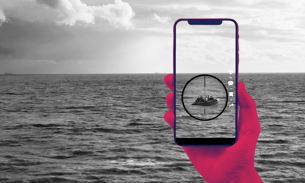
We’ve already seen this happen with Character AI. After several suicides and online harm were linked to its chatbots, as well as reports including our investigation into paedophile chatbots on the platform, the company decided to take action. It announced a ban on teen users in October. One result? Those users have been targeted by smaller apps with even weaker guardrails.
Overlooking the positives
We hear a lot about the ills of social media: bullying, addiction, misinformation. But it is also a place where young people can find community and understanding.
Jess O’Thomson, a trans rights expert and legal researcher, says they relied heavily on social media for support as a teenager. “I don’t know what I’d have done [without social media]. If I hadn't had friends online, I’d have had no friends.”
“A lot of content on social media is harmful, for kids as well as adults, but the answer is not bans which risk further isolating already vulnerable teenagers.”
In fact, several children’s charities have come out against such a ban for those very reasons. A joint statement, signed by the NSPCC and others, actively opposed the ban, saying that it “would offer limited protection from the toxic effects of algorithms”. It added: “Children – including LGBTQ and neurodiverse children – also require platforms for connection, self-identity, peer support and access to trusted sources of advice and help.”
Gaming
The Australian ban doesn’t target gaming. However some of the most popular games, like Roblox or Minecraft, offer online spaces for younger teens to hang out and chat. As I’ve reported before, Roblox has had a series of child safeguarding issues – including housing sex rooms – and it’s being sued by the state of Texas for “putting pixel pedophiles and corporate profit over [children’s] safety”. Do we really want to push kids on to these kinds of platforms?
One answer to this problem is to include gaming in the ban. It was discussed in Australia. But once again, it would be hugely difficult to enforce and would place even greater restrictions on what young people can do on the internet.
A dereliction of duty?
Ian Russell is acutely aware of the impact social media can have on teenagers. Nine years ago his daugher, Molly, died by suicide. The coroner concluded that material she’d seen online likely contributed to her death “in a more than minimal way.” Yet Molly’s father, who is now a campaigner for better online protections for teens, does not support a ban.
He argues that such a move would “let social media platforms off the hook by weakening the requirement for them to offer safe and high-quality experiences as a precondition for operating in the UK”.
In other words, it puts even less responsibility on social media companies to ensure their platforms are safe for kids.
Workarounds
Teenagers today have grown up with social media. Many of them have had profiles for years and are often more web-savvy than their parents. In Australia, the news of a ban triggered mass-downloads of VPNs (apps that make your device seem like it’s in another country); other users have reportedly found ways to trick facial age verification software. For example some age verification tools analyse browsing history to determine an age profile – sometimes known as age inference. There are reports that some teens have been Googling “adult” search terms – contraceptive options, flights, care homes – to try and trick the system.
Age verification software that relies purely on estimates based on a live video selfie can also be inaccurate, especially when systems are being asked to determine a difference of a year (a 15 vs a 16-year-old for example).
An experiment in progress
There is an argument that a blunt policy tool is what the situation demands. When tech companies fail to protect children, governments have a moral duty to act.
Those who argue against a ban instead want governments to regulate companies more robustly and for platforms to set age restrictions based on their risk level. But you can forgive parents for feeling fed up. Governments have said they’d regulate in the past, just as companies have said they’ll act. And here we are.
Australia’s government has certainly taken meaningful action. But what it has effectively done is to embark on a huge experiment – a real-life study from which we don’t yet have the findings.
Samaritans can be contacted 24 hours a day, 365 days a year on freephone 116 123 or by email at jo@samaritans.org
Reporter: James Clayton
Deputy editor: Katie Mark
Editor: Franz Wild
Fact checker: Ero Partsakoulaki
Production editor: Alex Hess
TBIJ has a number of funders, a full list of which can be found here. None of our funders have any influence over editorial decisions or output.
-
Area:
-
Subject: