What happens after you survive a bomb?
In Gaza, Israel’s explosives have killed tens of thousands – and caused a lifetime of suffering for many more survivors
When a bomb is dropped, it inflicts an immediate death toll: people killed by the blast itself, by flying shrapnel or by falling rubble. But the harm doesn’t stop there.
Some of those who survive the initial blast are left with visible injuries – broken limbs, burns or open wounds. Others may appear unscathed but experience long-term physical or mental injury.
We’ve reported on the health impacts from Israel’s campaign of attacks on Gaza, which has carried on for over two years. The bombardment has been so severe that bomb injuries already affect almost the entire population. And they will create serious issues for the region’s weakened health system for years to come.
While bombs differ in size and design, the patterns of injury and long-term illness they leave behind are remarkably consistent across conflict zones. This is how bombs affect every part of the human body over time.
Bones, muscles and limbs
Explosive violence causes distinctive limb injuries. Flying shrapnel and collapsing buildings can tear off arms and legs, and cause multiple fractures, crush injuries and nerve damage. These injuries are so severe that limbs often need to be amputated in hospital. In Gaza this has sometimes had to be done without anesthetic.
Even when limbs can be saved, survivors often face lifelong disability. In Gaza, where prosthetics, rehabilitation services and physical therapy are limited, the injuries are more likely to lead to chronic pain and reduced mobility that greatly affect daily life.
Children with amputations need to be fitted for new prosthetic limbs as they grow: a challenge in any setting, but especially under blockade.


Eyes and ears
Explosions fill the air with shattered glass, concrete dust and smoke. Cuts and burns on the eye are common among survivors and those clearing rubble, while repeated low-level exposure can lead to eye injuries increasing the risk of vision loss.
Hearing is easily damaged by explosions. Pressure waves rupture eardrums and cause permanent hearing loss or tinnitus. These issues worsen with sustained exposure – so people living in Gaza are at particular risk of deafness.
Lungs, nose and throat
Blast lung injury, a rupture of tiny air sacs in the lungs caused by the pressure wave, can lead to long-term breathing difficulties – and is one of the most common causes of death among initial survivors.
But the more enduring threat is environmental: pulverised concrete, asbestos from demolished buildings, fibreglass insulation, industrial chemicals and combustion residues linger in the air long after the fighting ends.
When inhaled, this toxic dust can cause chronic cough, throat irritation, sinus infections and exacerbate asthma – especially in children living in tents, shelters or damaged housing filled with contaminated dust.
In past conflicts, respiratory conditions are widespread among populations returning to heavily bombed neighbourhoods.
 A family emerge from the ruins of their home in Deir al Balah
Ali Jadallah/Anadolu via Getty Images
A family emerge from the ruins of their home in Deir al Balah
Ali Jadallah/Anadolu via Getty Images
Skin and flesh
Devastating burns are common for people living in war zones: caused by bombs, secondary fires,and chemical agents. Burns can easily become infected, and many survivors suffer chronic pain and long-term disabilities.
White phosphorus, a controversial incendiary weapon used by Israel in Gaza and Lebanon, can melt flesh and bone, creating deep wounds that are prone to infection and difficult to heal.
Aside from burns, living among toxic rubble, especially for children climbing on debris or families rebuilding their homes by hand, can cause skin irritation and rashes.
Brain and nervous system
Traumatic brain injury is one of the most common disabilities caused by explosive violence. The pressure wave that follows the initial blast can disrupt brain tissue, leading to memory loss, chronic headaches, dizziness, cognitive difficulties and mood swings. These injuries are often invisible, making them harder to diagnose and treat in a damaged and overwhelmed healthcare system like Gaza’s.
Children are at particular risk; exposure to bomb blasts can affect developing brains, contributing to learning difficulties, behavioural changes and regression. Toxic heavy metal dust can also affect neurological development.
Prolonged stress and trauma also warp neural pathways, contributing to long-term anxiety, depression and PTSD.
Heart and blood vessels
Blast waves affect not only the lungs and brain but also the cardiovascular system. The sudden pressure shift can damage blood vessels, disrupt heart rhythms or cause internal bleeding.
Long-term cardiovascular disease is also linked to sustained exposure to air pollution and toxic smoke, which increase inflammation and blood clotting risks.
The psychological effects of a bomb blast can also include stress, which in turn disrupts sleep patterns and raises the risk of heart disease.
Abdomen and internal organs
Fragments and collapsing buildings can cause life-altering injuries to the liver, kidneys, spleen and intestines. This often requires surgery and long-term monitoring – the sort of care that may be hard to access in a place where hospitals have been attacked.
Bomb damage to sewage systems – as has happened in Gaza, with raw waste flooding neighbourhoods – can also contaminate the water supply. This heightens the risks of diarrheal disease, hepatitis A, parasitic infections and kidney damage.
Reproduction and hormones
Environmental contamination from dust, heavy metals and chemical residues can affect reproductive health. Studies from other conflict zones have shown increases in irregular menstrual cycles and infertility. Pregnant women are at increased risk of complications, while babies may be born with birth defects.
This toxic dust can disrupt hormones that regulate the metabolism and control growth in children.
Mental health and ‘invisible injuries’
Every part of the body is influenced by psychological trauma. Living in a war zone reshapes stress hormones, immune function, sleep cycles and pain perception. Children exposed to repeated explosions show higher rates of anxiety, aggression, and behavioural disruptions such as bedwetting. Adults face cumulative PTSD, depression and grief.
These effects interact: a child with asthma triggered by dust exposure may also experience panic attacks at loud sounds; a parent with shrapnel injuries may struggle with depression that complicates healing.
Explosive weapons do not only cause acute injuries, they reshape the entire health landscape. The combination of physical trauma, environmental contamination, infrastructure collapse, and psychological stress means that no body system is untouched. In Gaza, where rebuilding and medical care are constrained, these long-term effects will shape public health for decades.
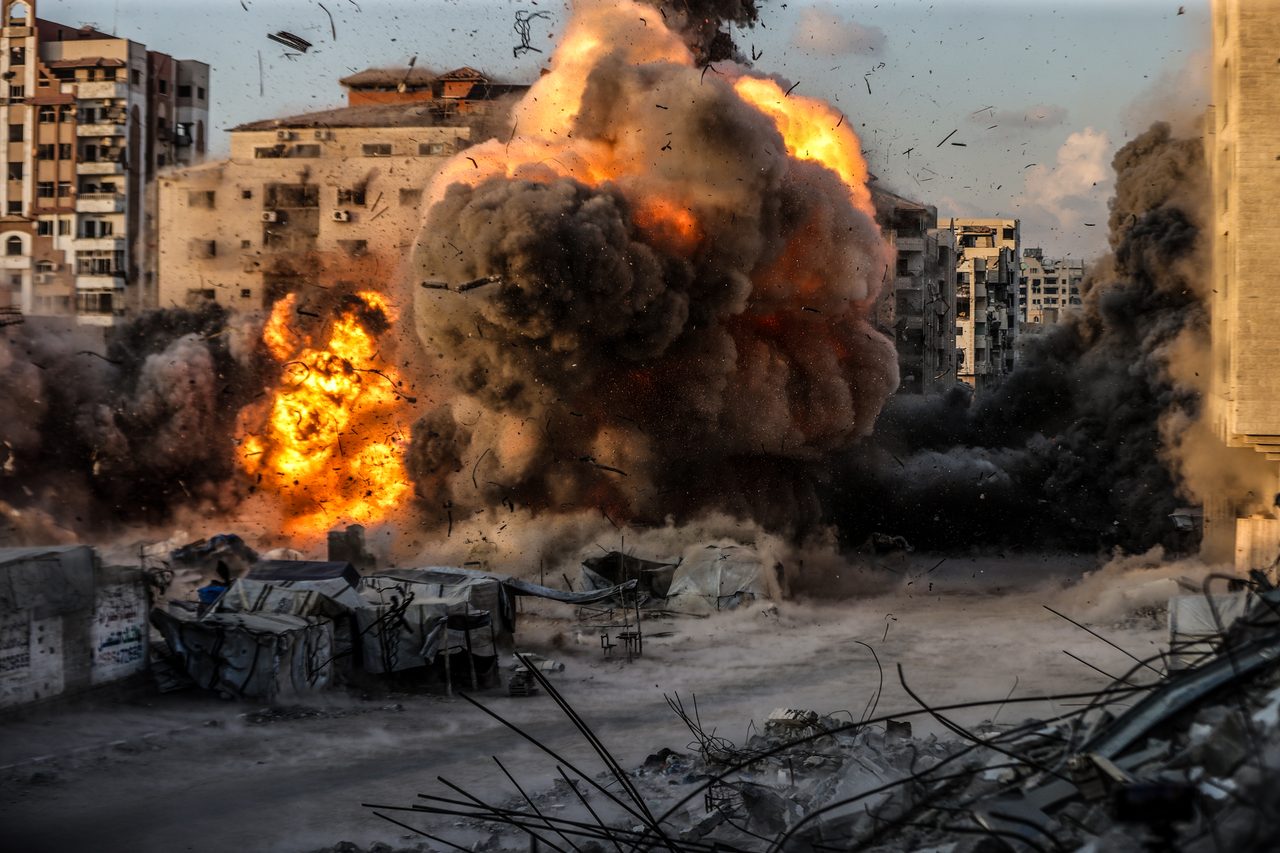
Header image: An Israeli bomb blows up a block of flats in Gaza City (Ali Jadallah/Anadolu via Getty Images)
Reporter: Misbah Khan
Global Health editor: Fiona Walker
Deputy Editor: Chrissie Giles
Editor: Franz Wild
Production Editor: Sasha Baker
Fact-checker: Ero Partsakoulaki
TBIJ has a number of funders, a full list of which can be found here. None of our funders have any influence over editorial decisions or output.
-
Subject:
-
Area: