Bureau submits evidence to UN expert’s Indigenous rights investigation
Our landmark project gave us more info than we could publish. Now we’ve shared it with the UN special rapporteur on Indigenous rights
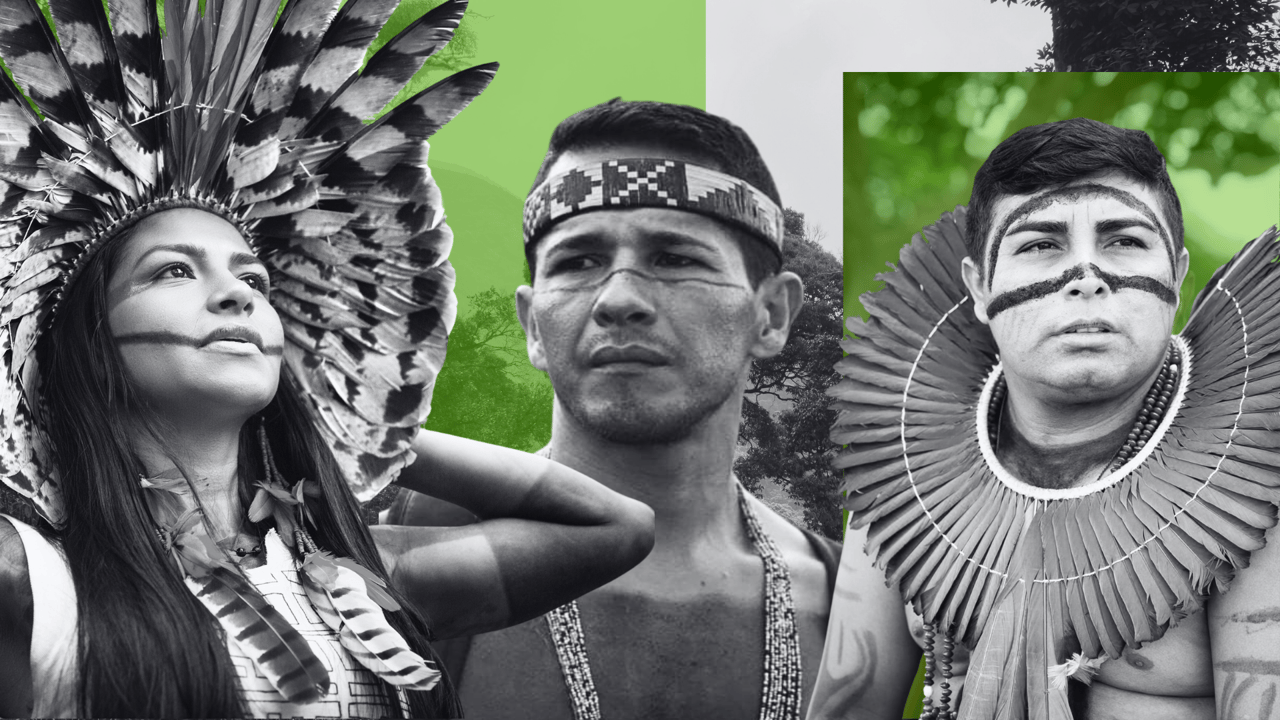
Last year, I spent several months leading an international team of reporters in interviewing 100 Indigenous people from the world’s tropical forests. If that sounds like a lot, it’s because it was.
Ten years on from the historic Paris Agreement to tackle climate change, I wanted to find out how life has changed for those on the frontlines of environmental breakdown. We spoke to 100 people, collected their stories and presented them in a unique interactive feature ahead of the Cop30 climate talks in Brazil.
On the streets of the host city Belém, on the edge of the Amazon rainforest, Indigenous people were out in full force during the negotiations. Their righteous anger was palpable. One protest led to people storming the conference venue, demanding to be listened to. The message echoed what I’d heard over the previous months. And although some progress was made during the talks to strengthen land rights for some Indigenous communities, many campaigners came away angry and disappointed.

But now, Albert Barume, the UN’s special representative for Indigenous people, is investigating the issue. He has invited people to share information and experiences about the formal establishment, or demarcation, of Indigenous lands. Barume is also looking into whether Indigenous people are properly consulted when it comes to things like fossil fuel projects that affect their lands – so we’ve shared our findings with his team.
Land rights came up time and again in our 100 interviews – both as a problem and a solution to the current crises. In Indonesia, we were told by one interviewee about “the seizure of our customary land for oil palm plantations”. We were also told how a lack of legal ownership results in invasions from gold miners, cattle farmers and other companies profiting from the forest in Amazon countries.
But we also heard that when governments enshrine ancestral lands in law, protecting them from invasion, Indigenous people co-exist sustainably with nature. In defending ancient forests, they protect the ecosystems the whole world depends on.



Later this year, Barume will present the results of his consultation to world leaders at the United Nations General Assembly. It is expected to be an authoritative report that will include recommendations for governments on how to better protect their Indigenous people.
As an impact producer at the Bureau, these consultations are an important part of my toolkit. For starters: there’s a lot of work that goes into a story that never makes it to the final piece. And while we wanted to give everyone a voice, we ended up with a spreadsheet with over 1,000 answers in multiple languages. So we inevitably had to be selective about what we put in the story.
All the information we collected, though, can be used as evidence. Hopefully, we’ve now given it to someone who can influence things for the better.
But impact isn’t always about what happens next – it’s also about how you do journalism. With this project, impact was built in from the outset. Speaking to Indigenous journalists and organisations, it became clear that European and US reporters can sometimes lack cultural understanding when working with Indigenous communities. We can impose time pressures and pursue an “extractive” approach, reducing people’s experiences to the few nuggets of information we think our audience will like.
We didn’t want to do that. So we worked with in-country reporters who could build on and deepen existing, trusting relationships through the project.
Journalism doesn’t happen in a vacuum. It’s part of an ecosystem. That's why engaging with people like Barume is so important. We are building a different kind of journalism and getting it into the hands of those with the power to change the world.
Main image: Oliver Kemp/TBIJ
Reporter: Grace Murray
Environment editor: Rob Soutar
Deputy editor: Chrissie Giles
Editor: Franz Wild
Production editor: Alex Hess
TBIJ has a number of funders, a full list of which can be found here. None of our funders have any influence over editorial decisions or output.