One cup of tea at a time: building trust in Bradford
Reflections on community-led journalism, the challenges of earning trust, and the power of listening
How do you earn trust in a community that’s used to being talked at or misrepresented? At the Bureau of Investigative Journalism, we wrestle with this question constantly, especially when reporting on sensitive issues that affect people’s everyday lives.
In Bradford, we’ve been exploring one way to do this: show up, listen and let people tell their own stories. There are no deadlines, no agendas – just presence and patience. That’s how Bradford StoryHub began: one cup of tea and one conversation at a time.
Communities notice who stays and who listens. Trust isn’t built in workshops or events – it grows in conversations, in showing up repeatedly, and in creating space for people to speak on their own terms.
Too often, the stories that make headlines are decided far away from the people whose lives they describe. In Bradford, local issues – like late buses or the lack of safe community spaces – matter just as much as national problems. Giving people space to tell these stories shows that local voices are valued and that journalism can reflect everyday realities, not just distant perspectives.
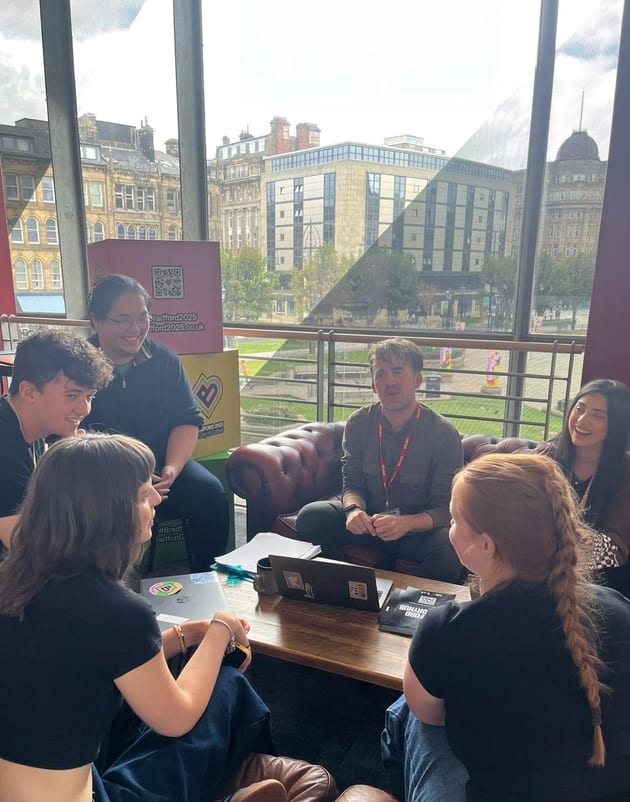 Youth listening session with Marnie Simpson from Bradford 2025 UK City of Culture
John Offord/ TBIJ
Youth listening session with Marnie Simpson from Bradford 2025 UK City of Culture
John Offord/ TBIJ
Since May, StoryHub has hosted more than 20 workshops with groups such as Bradford Immigration and Asylum Support and Advice Network (BIASAN), Highfield Community Association and Beyond the Margin, a Bradford-based community organisation supporting local people to share their stories and creative voices.
These sessions have explored a range of topics, from immigration and mental health to belonging and representation. Small exchanges often leave the biggest impact.
“It was good having someone come and sit down and listen to us,” said Alexandra Kon, a community development worker at Beyond the Margin. “A lot of people like to come and talk about the problems on the estate, but we like to share the positives too.”
A woman from Keighley told me that people like her – from migrant backgrounds – don’t get enough credit for their contributions in the UK. “From carers to scientists, immigrants make a big difference. We want that recognised in the news, not just the negatives,” she said.
Her words echo a wider national conversation. Hostility towards immigrants and other racialised groups has been amplified by the rise of Reform UK and the party’s leader, Nigel Farage. They’ve gained traction by tapping into people’s prejudices, but this woman’s experiences remind us of the value of local journalism that shows the real contributions of immigrant communities.
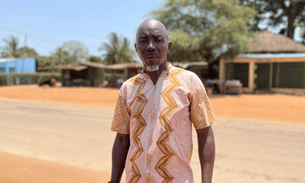
 Listening Session with Asumani Susho at Bradford African Community
John Offord/ TBIJ
Listening Session with Asumani Susho at Bradford African Community
John Offord/ TBIJ
Sometimes our work hasn’t gone as planned. One afternoon, I walked across Bradford to run a listening session with the African Caribbean Achievement Project (ACAP), only to find no one except the organisers had turned up. It was disheartening and I felt deflated. But that setback brought an unexpected opportunity. I met Claudia McFarlane, ACAP’s deputy chair,
We discussed the aims of StoryHub and agreed to try again, rescheduling for a time and place that works for the young people they support. To encourage participation, we’re going to offer them £10 vouchers and pizza.
This episode highlighted one of the key learnings from StoryHub: flexibility matters. Adjusting times, spaces and incentives to meet community needs is not just practical – it builds credibility. These experiences of trial and adjustment feed directly into the kind of reflective spaces we aim to create.
Later that same day, I co-led a workshop with Nursena Jamal from Educate Against Islamophobia at BCB Radio. The session was interactive and deeply moving, giving participants space to explore how Islam and Muslim communities are represented in the media, and what can be done to challenge stereotypes.
The workshop also underscored that creating safe, culturally sensitive spaces allows participants to lead the conversation. Listening is as important as speaking, and participants often guide the focus to what matters most to them.
Building trust also requires time and patience. Communities may hesitate at first, unsure if outsiders are genuinely listening. What keeps me going are small shifts: someone returning to a second workshop after hesitating the first time; a participant describing the experience as “empowering”; or a community worker saying that the StoryHub has been a “breath of fresh air”. These moments don’t make headlines, but they remind me why I’m here. Trust is built in conversations, cups of tea and consistent presence. These small but gradual gains illustrate the slow, deliberate work that underpins meaningful community engagement.
TBIJ has taken similar approaches in other
projects, from Hot Homes, a groundbreaking community project which
involved south London residents in exposing how their homes are
ill-adapted to climate change, to Trans+ Voices, which produced
inclusive investigations with trans and nonbinary communities. StoryHub
is part of this broader effort to make journalism less extractive
and more reflective of lived realities.
Partnerships have been key. Organisations like BIASAN and Beyond the Margin already hold trust in Bradford, and working alongside them has opened doors. Building those relationships has underscored for me that meaningful reporting starts with collaboration and respect, not extraction.
As the pilot continues, the challenge remains clear. Trust is earned gradually and scepticism lingers. But the lessons from these first six months are already informing how we approach community-led storytelling. Journalism that earns trust begins with presence and patience, one cup of tea at a time.
Header image: John Offord/ TBIJ
Reporter: John Offord
Bureau Local editor: Gareth Davies
Production editor: Sasha Baker
TBIJ has a number of funders, a full list of which can be found here. None of our funders have any influence over editorial decisions or output.