Government slammed for ‘callous’ inaction on farmworkers abuse
Criticism comes after the rejection of various ideas, put forward by its own advisers, on how to protect migrant workers from exploitation
Every year, thousands of people come to work on British farms on a visa that leaves them wide open to exploitation. Some have amassed huge debt simply to pay for visas and travel. Others have been given housing infested with mice or cockroaches. Many more have faced bullying, wage theft and even physical assault.
For the last few years, calls to reform the seasonal worker visa have gone largely ignored. Now, the government has even rejected several recommendations from its own independent immigration advisers. Politicians and experts we spoke to said this inaction will mean that the people who pick our fruit and vegetables continue to suffer unfair treatment and abuse.
In July 2024, the government’s Migration Advisory Committee published the results of an in-depth review into the visa scheme. A central recommendation was the guarantee of at least two months’ pay in order to help prevent workers falling into debt. The committee also supported an increase in wages as a means of curbing exploitation.
Last month, the government finally responded to the committee, ruling out one of the above suggestions and failing to address the other.


It did accept the recommendation of tighter enforcement “in principle” – but ignored the substance of the enforcement suggestions, instead pointing to the Fair Work Agency (FWA), which it is already setting up.
Eleanor Lyons, the independent anti-slavery commissioner, told us the government had missed a clear opportunity to fix problems with the visa.
“It is unacceptable that too many face withheld pay, unsafe conditions and abuse – and feel they cannot speak out because their job, income and immigration status all depend on a single recruiter,” she said.
“The government must tackle these gaps decisively and ensure that workers’ and survivors’ voices are at the heart of its approach. Without these safeguards, harm will continue where it could and should be prevented.”
In its review, the committee cited research that found some workers pay as much as £5,000 to come to the UK on the six-month visa. The debts they take on to cover travel, visas and other costs can make them susceptible to mistreatment and poor working conditions, the research said.
One employee mentioned in the research said that in the farm where he worked “bosses and supervisors treat the workers like slaves”. Others said that they had reported problems only to be threatened with deportation or blacklisting from future work. It also cited a worker’s account of being sexually threatened by multiple colleagues and then told by her managers that it was easier to get rid of her than to move the perpetrators.
Chris Law MP, the Scottish National Party’s business spokesperson, said the committee’s recommendations would have helped shift the balance away from exploitative employers to workers.
“Guaranteeing pay, increasing wages and improving enforcement should have been priorities for a Labour government that claims to champion workers’ rights,” he said.
“Their failure to act upon these recommendations and instead choose to follow the policy of the previous Conservative government demonstrates a callous lack of care and compassion for vulnerable workers.”
Brian Leishman, Labour MP for Alloa and Grangemouth, said he had spoken to seasonal workers about their working conditions and the government should have accepted the committee’s “reasonable and evidence-based recommendations”.
“[The recommendations] are not radical steps, they are basic rights that all workers should expect when working in the UK,” he said.
The government backed the committee’s call for the so-called “employer pays principle” – the idea that employers rather than workers should pay for recruitment costs – which it said was a more workable solution to reducing worker debts.
But it said the industry should look into if and how this should be done – and Angela Eagle, minister for food security and rural affairs, has already said that the government had no plans to mandate the rule in the horticulture sector.
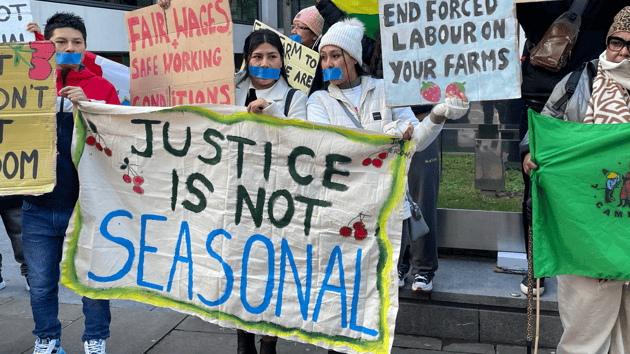 Seasonal workers protest outside the Home Office last year
SOPA Images / Contributor via Getty Images
Seasonal workers protest outside the Home Office last year
SOPA Images / Contributor via Getty Images
Baroness Frances O’Grady, a Labour peer and former head of the Trade Union Congress, said that the government should “look again at the employer pays principle, which would provide at least some income guarantee for workers”.
She also said that the FWA should be properly resourced “to put many more labour inspectors out in the field, so we can crack down on abuse”.
The agency is being introduced as part of the Employment Rights Act and will merge several existing bodies, including HMRC’s minimum wage unit and the Gangmasters and Labour Abuse Authority (GLAA).
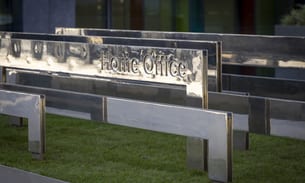
Yet questions remain around its funding. We previously reported that the UK has a quarter of the number of labour inspectors recommended by the International Labour Organisation. We also found that the Home Office spends more money on publishing, stationary and printing than it does on funding the GLAA.
One of the committee’s other recommendations was that there needed to be greater coordination between the different bodies involved in “seasonal worker welfare”. This would be addressed, at least in part, by the introduction of the FWA.
But the committee’s specific recommendations around enforcement, such as enhanced inspection powers, better data collection and for workers to be given information on their rights before they come to the UK, went entirely unmentioned in the government response.
The Home Office did not directly respond to the criticisms when approached for comment. Instead, it said that the visa was “not a long-term solution” to labour shortages in the agriculture sector and that it was “supporting industry to explore the role that technology and local workforces can play”. Last year, the government extended the visa scheme, originally conceived as a pilot, until the end of 2030.
There have been several calls to reform the visa since it was launched in 2019, including from the independent chief inspector for borders and immigration, from the House of Lords Horticulture Committee and from the UN special rapporteur on contemporary forms of slavery. While successive governments have acknowledged that migrant workers are vital for Britain’s food system, little has been done to protect them from exploitation.
There have also been a growing number of legal challenges brought by workers on the visa scheme, including from one who said they had been trafficked.
Jamila Duncan-Bosu, an employment lawyer and co-founder of the Anti-Trafficking and Labour Exploitation Unit charity, is helping to bring the claim on the grounds that the scheme breached the worker’s human rights. She said the government’s latest response left the risks faced by migrants “largely untouched”.
“The government had an opportunity to take decisive action to protect some of the most vulnerable workers in the country,” she said. “Instead, they have chosen a path that prioritises administrative convenience over human dignity.”
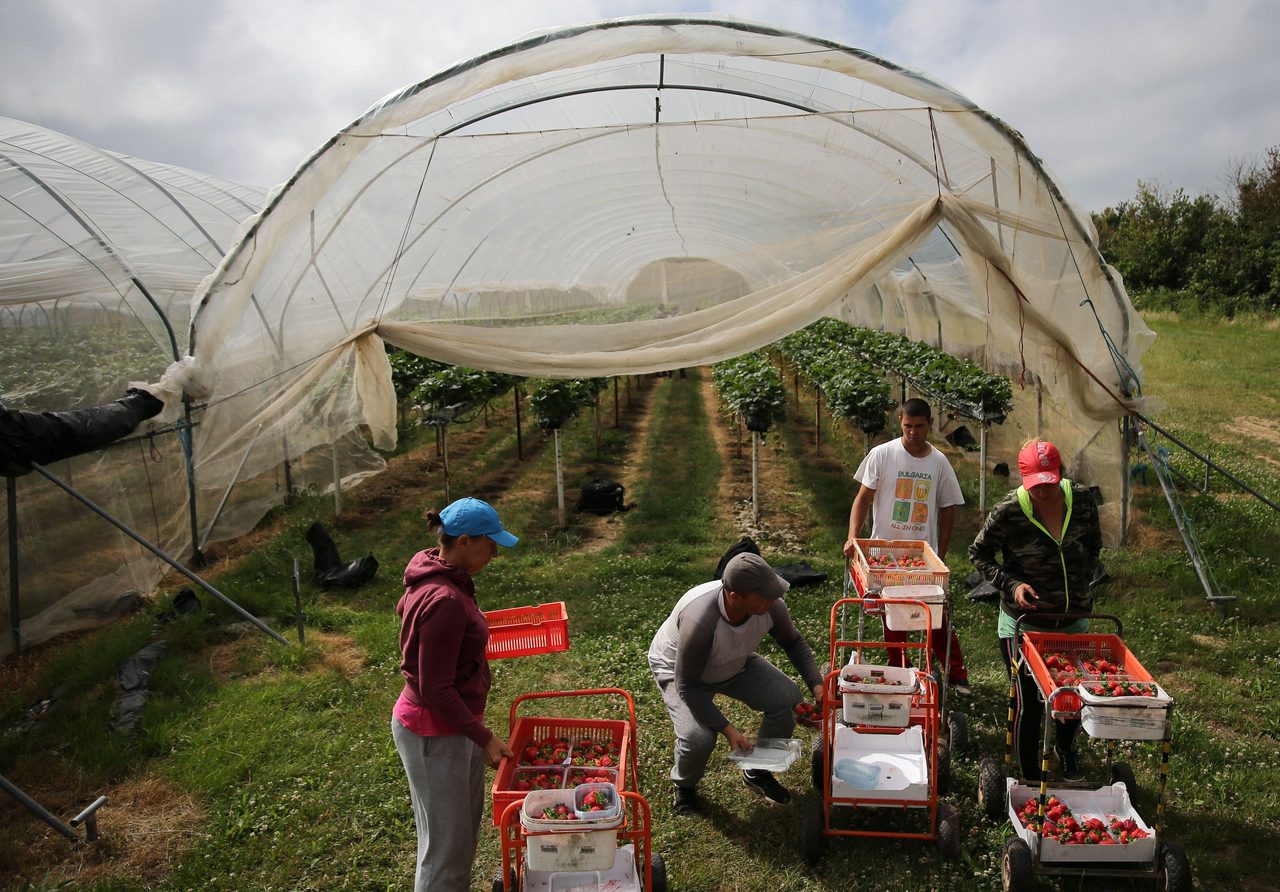
Lead image: Seasonal workers pick strawberries at a farm in south-east England. Credit: Daniel Leal / AFP via Getty.
Reporter: Emiliano Mellino
Bureau Local editor: Gareth Davies
Deputy editor: Katie Mark
Editor: Franz Wild
Production editor: Alex Hess
TBIJ has a number of funders, a full list of which can be found here. None of our funders have any influence over editorial decisions or output.