Two ex-soldiers plied 15-year-old with alcohol and abused her in an illegal children’s home
Ordeal came after Caerphilly council sent a vulnerable girl 300 miles away to an unregistered home staffed by convicted criminals
Content warning: this story contains descriptions of violence, sexual abuse and self-harm
When 15-year-old Alice* was moved 300 miles to escape sexual exploitation, she and her family had every right to believe she would be kept safe from harm.
After all, the children’s home, in Ripon, North Yorkshire, was supposed to provide her with respite, outdoor activities and protection. She had been placed there by her local authority, Caerphilly Council in south Wales, and it was even run by a company accredited by the Ministry of Defence.
Instead Alice would become the victim of one of the worst safeguarding failures of Britain’s growing shadow care system, in which hundreds of children live in homes away from the scrutiny of Ofsted inspectors. Running a children’s home that isn’t registered with Ofsted is against the law, and yet hundreds of children in England and Wales are sent to such places every year.
Court records we obtained show that staff were told about Alice’s age and vulnerabilities before she arrived. MAP Adventures, which ran the home and predominantly employed ex-military personnel, noted she was “at the highest risk of child sexual exploitation”. That assessment was signed by Liam Ramsay and Stephen Hurst, two former soldiers in their 40s. We can reveal the pair had been recruited to look after vulnerable children despite holding seven previous convictions between them, including four for violent offences.
After less than a month in Ripon, Alice was moved again – another 100 miles – to a three-bedroom property outside Durham. Like the previous home, this one was not registered with Ofsted and so was not subject to inspections. Alice was to live at this illegal children’s home, with no other children, under the supervision of two MAP Adventures carers.
When Hurst saw a message on the company’s WhatsApp group asking for staff to cover a shift on 3 October 2024, he immediately alerted Ramsay.
That day, the two men drove Alice into Durham city centre, telling their duty manager they were taking her on a river walk. In fact, they took her to a pub. And then on to two more. They bought her wine, cocktails and shots. As the afternoon wore on, Alice became increasingly drunk.
At the final pub the conversation turned to drugs. Ramsay knew where to get some cocaine, the court was told, and they drove to pick it up. Alice took some. Hurst went to a supermarket and bought more alcohol: this time vodka and gin. They headed back to the property.
When they arrived, Alice was plied with more drink and drugs until she was, in her words, “totally out of it”. Then the two men sexually assaulted her for hours.
In the morning, Ramsay and Hurst made efforts to cover their tracks before the next shift arrived. They removed empty bottles and traces of drugs from the house. They cleaned away Alice’s blood.
The following day, Alice ran away from the home and was picked up by police at a nearby train station.



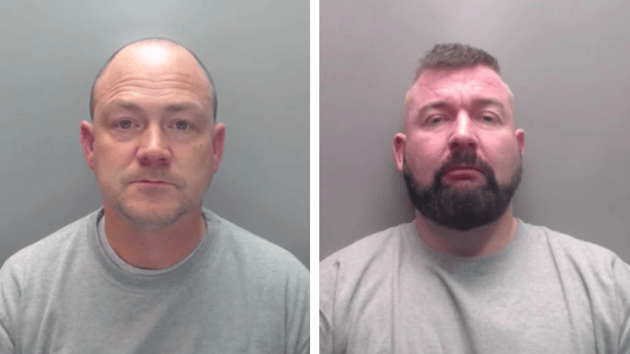
In April 2025, Ramsay and Hurst were found guilty of numerous offences, including sexual activity with a child. Ramsay, 40, was jailed for 11 years while Hurst, 46, was jailed for nine years. Both men were placed on the sex offenders register for life.
“Rather than do your duty,” the judge told them, “you both behaved absolutely appallingly and in a way that would make right-thinking members of the public hearing about it recoil, firstly in abject disbelief and then probably in horror.”
“I was in care to be looked after, taken care of and protected from harm,” said the girl in a victim’s statement read out in court. “These men have done the exact opposite to that. They have sexually abused me for hours and have caused me so much pain and destruction.”
Their assault, the court heard, had left Alice with injuries that caused her pain for months. But the physical damage was only part of it. Her parents said that after giving evidence at the trial, she overdosed.
“After [our daughter] provided evidence during her trial, we received a call to say that she was en route to hospital after taking an overdose,” they said in a statement read out in court. “[Our daughter] was screaming down the phone, saying that she’d been raped, having flashbacks, and shouting that she could see Liam and Stephen. This is just one small example of our day-to-day lives now.”
Ramsay and Hurst’s convictions were made public by Durham Police, but the press release omitted key information about how Alice came to be in the care home, the company that ran it, the local authority responsible and Ramsay and Hurst’s criminal history.
We have obtained these details – and have connected Alice’s nightmare to the growing nationwide scandal of illegal children’s homes.
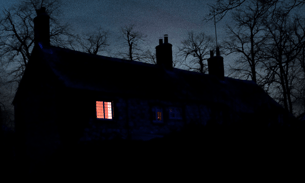
 The property in Durham where Alice was sent to live …
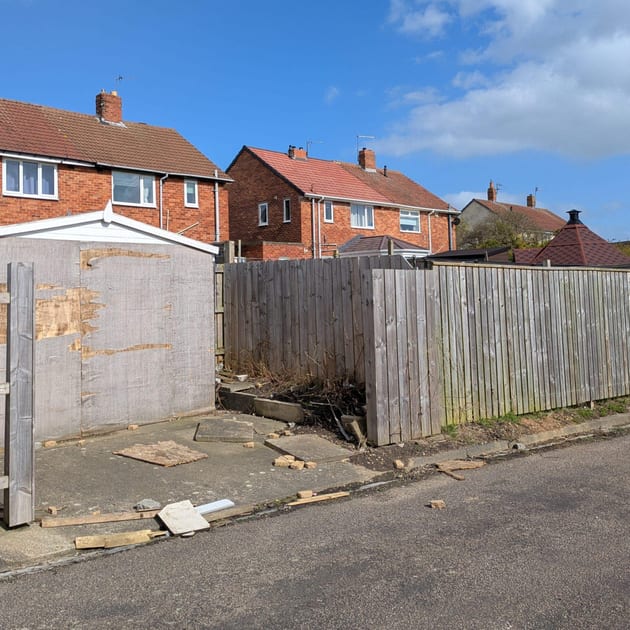 … and the street behind the house
It was only through contacting social care providers in Durham that we learned of Caerphilly’s involvement. And initially the council refused to name MAP Adventures, claiming it would identify the child. It later claimed the company was registered to provide outdoor pursuits – including short periods of respite no more than 28 days in length – for children in care. We have not been able to substantiate this. The company was not registered with Ofsted or the Adventure Activities Licensing Authority, which accredits outdoor activity centres for young people in the UK.
We have spoken to two former MAP Adventures staff. They said the company had looked after Alice beyond the 28-day legal limit at the request of Caerphilly. Alice was attacked on her 29th day with MAP.
Homes providing these breaks, which are supposed to allow children in care to take part in recreational or sporting activities, do not need to be registered with Ofsted. But Alice was put in the care of MAP Adventures because she was at risk of sexual exploitation in Wales. She was there for her own protection. This means the homes should have been registered and checked – yet neither of them had ever been visited by an Ofsted inspector.
“We were told [our daughter] would have a chance of resetting and it would be an opportunity for [her] to engage in outdoor activities,” Alice’s parents told the court. “However, the reality is both Stephen Hurst and Liam Ramsay jointly decided to supply our daughter with copious amounts of alcohol and drugs, knowing her vulnerabilities, before sexually abusing her.”
After we identified MAP Adventures by obtaining a transcript of the court case, we contacted Caerphilly again. Despite the nature of the events we were asking about, the council refused to answer any further questions or give a public statement. It said it would be making no further comment.

No oversight
MAP Adventures went bust in August last year, with unpaid tax bills. It was run by Paul McGrory, himself an ex-serviceman. The company’s website is no longer live but internet archives show that it once boasted of his track record of working with children in the UK, Ireland, Oman and the UAE. It said his team were “highly qualified and share their knowledge and skills to give the best possible adventure experiences”.
McGrory, a former sergeant from the Royal Army Physical Training Corps, spoke to us over a video call from the terrace of a bar in Cyprus, where he moved after his company collapsed. He said he was “sickened to the core” by the abuse, which he said had ruined lots of people’s lives.
“Could I have stopped it?” he told us. “No. There’s nothing I could have done ... my company couldn’t have done anything.”
He claimed only one conviction was picked up by the company’s background checks and that he judged it to be immaterial. “Ramsay had a criminal record and that was for assault,” he said. “I knew that. I did 22 years in the army, did I scrap? One hundred percent. That doesn’t mean you’re not fit to work with anybody.”
McGrory claimed he carried out spot checks on the properties himself and paid for independent inspections. “We were not regulated but … I would get care home managers at my own cost … and they would come and inspect our homes,” he said.
MAP Adventures’ application to sign the MoD’s Armed Forces Covenant, pledging to ensure former service personnel are treated fairly, was approved in 2022. The company displayed the covenant logo on its website alongside the emblem of the Career Transition Partnership, a scheme which helps people transition from a military career into civilian employment.
The MOD said it did not have the powers to check if companies were operating illegally. It added it had removed MAP Adventures’ from its covenant database. The firm’s pledge, which was previously published by the MOD, has also been deleted.
A MAP Adventures deputy manager gave evidence in the trial. He said around 30 people lost their jobs when the company shut down after the offences were committed.
“The whole incident has tainted my view of the care sector to such an extent I couldn’t work in it again,” he told the court. “I had faith in my colleagues, most of them being veterans, and I didn’t believe I could be working alongside men capable of carrying out such heinous crimes against a vulnerable child.”

‘Children in illegal homes should be zero’
Councils say unregistered homes are only ever used as a last resort, when no lawful accommodation is available. Yet this understates the shocking prevalence of illegal homes in the UK. In 2024, nearly 800 children in England were sent to live in illegal accommodation, and for an average of six months each.
The Public Accounts Committee said the figure was “unacceptable” and children were being put in danger by a broken system. But earlier this month, the government rejected the committee’s call for the Department of Education to set out how it will reduce the number of children in illegal homes to zero by 2027.
“The idea that there could be other children in a similar position to the victim in this case at this very second should simplify things for the government,” said Sir Geoffrey Clifton-Brown, chair of the committee. “We call on the government to reconsider our recommendation. The number of children placed in illegal homes should be zero by the end of 2027. Period.”
Rachel de Souza, the children’s commissioner, said serious questions must be asked about how people with criminal records were allowed to work with children. “This case is a deeply distressing example of profound failures by systems and services intended to keep the most vulnerable children safe,” she said.
“This child was sent hundreds of miles from home, exposed to unimaginable harm and left without the curiosity from the professionals involved in her care to step in to protect her.”
* Name has been changed
Samaritans can be contacted 24 hours a day, 365 days a year on freephone 116 123 or by email at jo@samaritans.org
This article was updated on 2 April 2026 to correct a factual error that came to light after publication.
Reporter: Tom Wall
Bureau Local editor: Gareth Davies
Deputy editor: Katie Mark
Editor: Franz Wild
Fact checker: Ero Partsakoulaki
Production editor: Alex Hess
TBIJ has a number of funders, a full list of which can be found here. None of our funders have any influence over editorial decisions or output.
-
Area:
-
Subject: