
Our story on the money behind Colombian coal mine sparks legal action
Investors and churches argue HSBC breached global human rights duties after we revealed its deal with mining giant Glencore
Mining giant Glencore’s vast coal mine in Colombia, Cerrejón, is an open pit six times the size of Manchester.
Last year, our senior environment reporter Josephine Moulds uncovered how UK high street bank HSBC helped raise $1bn for Glencore in 2023 – despite the bank’s pledge in 2021 to stop funding companies increasing oil production “as soon as possible”.
The mining mammoth was in fact ramping up production in the two years leading up to its deal with the bank.
Now, Methodist churches in Colombia, Britain and Ireland have filed a complaint against HSBC for violating international guidelines.


The complaint argues the bank has breached its human rights and environmental duties under standards set out by the Organisation for Economic Co-operation and Development (OECD). It centres on Cerrejón.
The company has already faced litigation in the Colombian courts over interfering with rights to health and a healthy environment of those living nearby.
This new development now shows how a group of churches, investors and a Latin American NGO have also followed the money behind the mine and taken their complaint to the OECD, which aims to promote responsible business.
The Methodist Churches of Great Britain and Ireland, alongside Epworth Investment Management Ltd, who jointly submitted the complaint, are investors and customers of HSBC. They have long called for the bank to stop financing fossil fuel companies and projects.
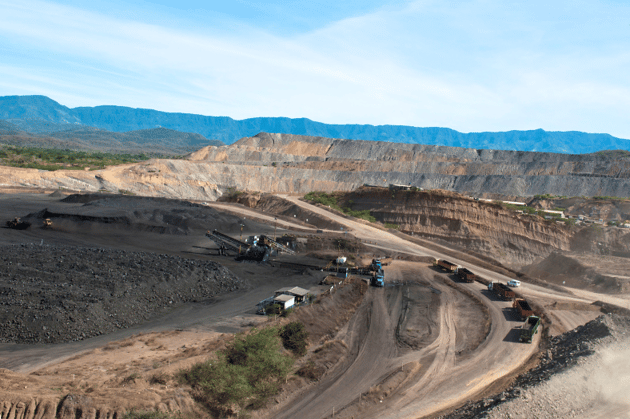 The opencast coal mine in Cerrejón, northern Colombia.
Credit: Guy Bell / Alamy
The opencast coal mine in Cerrejón, northern Colombia.
Credit: Guy Bell / Alamy
Harj Narulla, a barrister specialising in climate litigation at Doughty Street Chambers, who is representing the group, told us that outcomes from previous proceedings in Colombia relating to the mine haven’t been implemented. “So we're trying a different strategy of going after the source of funds,” he said.
“The focus of the complaint is broader than just that project, but we are picking that out as a particularly egregious example of how HSBC is breaching their own policies,” Narulla added.
HSBC said in a statement: “We have committed to phase out financing of thermal coal-fired power and thermal coal mining by 2030 in EU and OECD markets, and by 2040 in other markets. These commitments support our ambition to align the financed emissions in our portfolio to net zero by 2050.” It added that its financed emissions related to thermal coal mining reduced significantly and it was aligned with the Paris Agreement.
What Josephine’s work did was help ensure that those of us further up the chain – investors, banks, policymakers and the wider public – could no longer claim ignorance.
Following the financial flow
Reporter Cesar Molinares Dueñas met with communities living downstream from the mine for our story last year. He saw how the Ranchería river, which once provided water for over 1,500 Indigenous community members, was now running dark. He also heard from Grismaldo, an Indigenous Wayúu man, about how animals that drank from the river became ill and died for no other obvious reason.
Glencore declined to comment on the complaint brought against HSBC. However, they previously told us: “We aim to avoid harm to people from our activities, respect human rights, [and] contribute to the social and economic development of people and society more widely,” adding that it follows best business practices in line with international standards. The company said its activities do not negatively affect the Ranchería river’s water quality or volumes, which it says it tests and finds to be within regulatory limits for domestic consumption.
While the impacts of the mine on neighbouring communities have been widely reported, the links with international finance have not.
Josephine analysed data from the climate-focused bank switching platform Bank.Green, which compared banks’ lending with their public commitments around funding coal companies. The links she uncovered gave further evidence to the grouping of churches and investors.
Andrew Harper, deputy chief executive of Epworth Investment Management and the central finance board of the Methodist Church, said: “What Josephine’s work did was help ensure that those of us further up the chain – investors, banks, policymakers and the wider public – could no longer claim ignorance.”
He added: “Her reporting did not create our concerns, but it sharpened them. It connected dots that needed connecting and asked questions that deserved answers.”
Like many other banks, HSBC was rolling back on its climate ambitions when we reported on its financing of Glencore. In mid-2025, the bank had abandoned certain emissions targets, cut the chief sustainability officer role from its executive board, and introduced exceptions to its coal policy.
The Bureau has been reporting on HSBC’s investments and policies for over five years. Josephine first revealed how the bank coordinated efforts to try and water down action on climate change in the banking sector in 2021. The following year, she revealed that the bank was counting deals for mines, pipelines and oil rigs towards its $1 trillion “sustainable” finance target.
Lead image: Frankie Goodway/The Bureau
Reporter: Grace Murray
Environment editor: Robert Soutar
Production editor: Lydia Morrish
Deputy editor: Chrissie Giles
The Bureau has a number of funders, a full list of which can be found here. None of our funders have any influence over editorial decisions or output.
-
Subject:
-
Area: