
Anti-SLAPP bills introduced in both houses of parliament
MPs and peers across the parties want to end the silencing of whistleblowers and journalists
For decades, London’s legal system has been used by oligarchs, abusers and kleptocrats to silence critics and victims, earning it the title of the libel capital of the world.
Now, after a string of broken promises, a cross-party effort by lawmakers could finally clamp down on SLAPPs – abusive lawsuits that have threatened free speech here.
“For too long, British courts have been used to hush-up unethical behaviour and corporate abuses,” said the Conservative peer Baroness Stowell, who introduced a private members’ bill yesterday.
A separate bill is expected today from a Conservative MP. Either could put an end to these lawsuits if they are passed into law.
So-called SLAPPs (strategic lawsuits against public participation) are spurious legal threats used to silence journalists, whistleblowers and those brave enough to speak truth to power. In recent decades, oligarchs, corporations and other rich, powerful figures have used SLAPPs to stifle debate. The tactic, known as lawfare, has also fuelled a lucrative industry of libel lawyers, whose fees can top £700 an hour.


We were disappointed when the government did not include long-promised legislation in this year’s parliamentary agenda last month. But this development is a significant moment in our years-long push – working as part of the UK Anti-SLAPP Coalition – for stronger protections against specious legal threats. This is a moment that could finally lead to a change in the law.
Today, Sir John Whittingdale MP is expected to introduce a separate anti-SLAPP private members’ bill in the Commons. Whittingdale secured a high position in this year’s private members’ bill ballot, giving his proposal a greater chance of securing parliamentary time.
He said that SLAPPs had been used for too long by the “rich and powerful to suppress legitimate investigative journalism and to muzzle free expression”.
Susan Coughtrie, co-chair of the UK Anti-SLAPP Coalition, said these bills present an “opportunity to turn this support into robust, accessible and universal protections for everyone”.
We have been at the forefront of the movement against SLAPPs, reporting aggressively on some of London’s fiercest libel lawyers, defending our work from a lawsuit brought by Kazakh oligarchs, and holding the legal regulator to account for its botched attempts to tackle the issue.
In 2024, we worked with MPs to organise a parliamentary debate that saw stories silenced by legal threats aired in the House of Commons. The project, which won one of British journalism’s most prestigious awards, sought to put public interest stories back where they belong – in the public domain.
The movement has won important victories, including the UK’s first-ever anti-SLAPP protections. But these protections, which allow spurious cases to be struck out early, are limited to people commenting on matters related to economic crime. The new law would extend these protections to all forms of public-interest speech.
This is because the aim of a libel claim is often not to win in court. Most SLAPPs never even make it to trial because an early legal letter is enough to silence the target. If a case does reach court, the potential legal bill can run into the millions for both parties, meaning that fighting it is well beyond the means of most defendants.
Reporters: Lawrence Marzouk and Ed Siddons
Enablers editor: Lawrence Marzouk
Production editor: Frankie Goodway
Deputy editor: Chrissie Giles
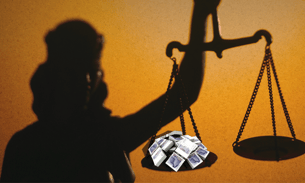
Header image: Frankie Goodway/The Bureau
The Bureau has a number of funders, a full list of which can be found here. None of our funders have any influence over editorial decisions or output.
-
Area:
-
Subject: