Barclays spots a chance to profit from extreme weather crisis
Europe’s biggest funder of fossil fuels urges investors to see an opportunity in ‘super’ El Niño that could leave millions starving
This story was published in partnership with:

Barclays has highlighted “opportunities” to profit from a devastating food crisis that could leave more than 100 million people hungry.
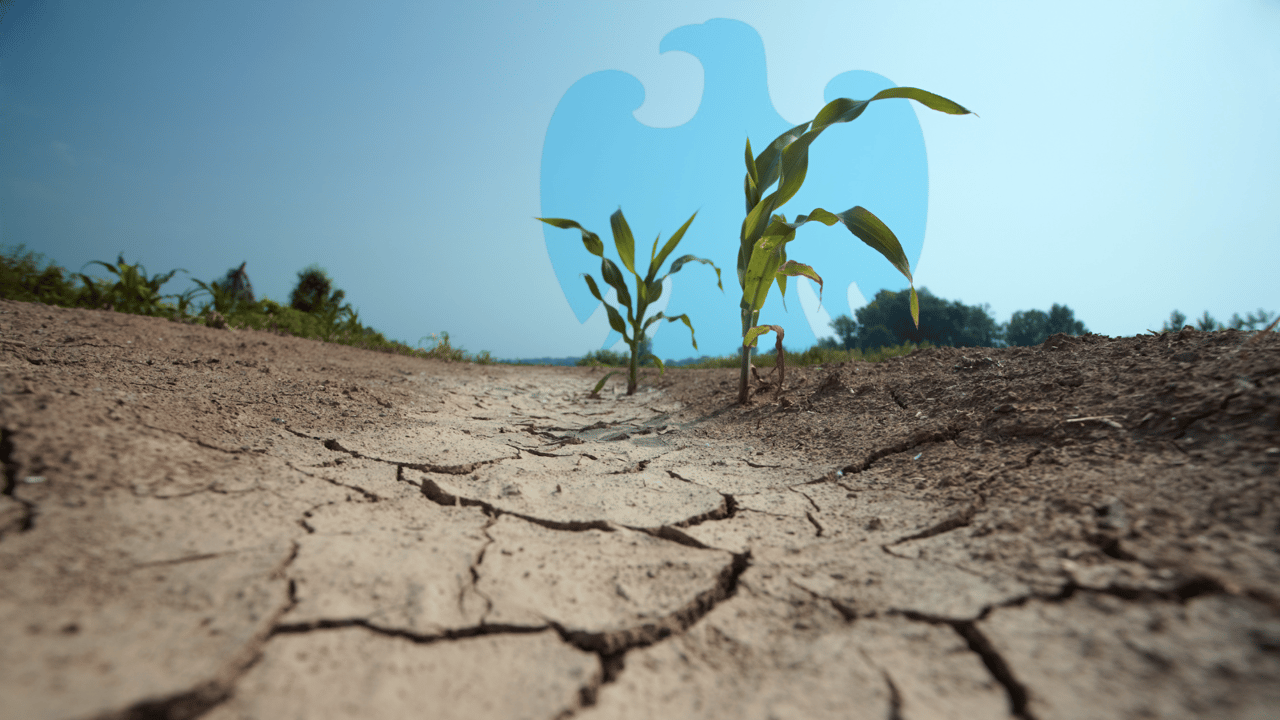
As wildfires rip across France and Spain, forecasters predict a “super” El Niño weather cycle in 2026/27, which could bring even more extreme weather that would threaten harvests and food supplies across the globe. Populations already battling famine and poverty are likely to be among the worst hit.
Writing to clients earlier this month, however, Barclays urged them to look on the bright side and see the coming catastrophe as a potential money-maker.
“For investors, a very strong El Niño should be viewed as a source of market dispersion rather than a uniformly negative shock,” read the research note, which we’ve seen.
“While a stronger El Niño creates risks for some sectors and regions, it also creates opportunities, with historical events often driving significant price movements for weather-sensitive markets.”
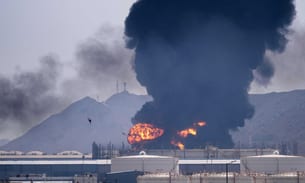
Barclays is Europe’s biggest funder of fossil fuel companies, and this weather cycle is expected to be particularly devastating because it will exacerbate already extreme weather caused by burning fossil fuels. So far in 2026, wildfires have ravaged parts of Europe and North America, while deadly flash floods have swept across West Africa.
Having spent decades bankrolling the climate crisis, Barclays is now picking out opportunities to profit from the disaster it helped create.
Farmers, meanwhile, are grappling with volatile prices of fertiliser and other vital supplies, choked off by the ongoing US–Israel war against Iran. Economists say that the combination of these pressures will disrupt crop yields and food production, leading to shortages and price spikes this year and next.
Brits dealing with a cost of living crisis have seen food prices rise by 40% over the past five years – increases that have an outsized effect on the poorest households, according to the Joseph Rowntree Foundation. The poverty charity’s lead analyst, Sam Tims, said any further increase would “put real pressure on families that are already struggling”.
Many of the countries in the path of El Niño are already dealing with drought and conflict, as well as suffering from recent swingeing cuts to international aid. Up to 125 million people are expected to need urgent food aid by December – with risks of famine in Sudan, South Sudan and Somalia – according to the Famine Early Warning Systems Network.


In Barclays’ note to clients, the bank’s analysts advise investors on how to exploit the “El Niño trade”. They note the disruption of fertiliser supplies combined with weather stress will hit hardest in some of the world’s poorest countries.
The research prompted an angry response from Greens. Adrian Ramsay, MP for Waveney Valley, said: “It is grotesque that Barclays, having pumped billions into coal, oil and gas expansion, is now looking at a global food crisis being deepened by climate breakdown and seeing a trading opportunity.
“This is the logic of a financial system that has completely lost sight of what it exists for. People are facing real hunger and rising food prices, including here in the UK, while some of the biggest banks look for ways to profit from the chaos they helped create.”
A spokesperson encouraged people to “vote with their feet, stand up to Barclays’ corporate greed and withdraw their accounts”.
Burning opportunity
The “Godzilla” El Niño, as it’s being called, comes on top of record-breaking temperatures around the world, which scientists link directly to the burning of fossil fuels.
Gareth Redmond-King, head of the international programme at the Energy and Climate Intelligence Unit non-profit, said: “We can’t do anything about El Niño – it keeps coming. But the underlying risk is the continuing burning of oil, coal, and gas. As we continue fueling climate change, we just make it more and more dangerous.”
The UN says coal, oil and gas supply must be reduced rapidly between now and 2050 to rein in global heating. Yet last year alone, Barclays funnelled $17.6bn to companies increasing production of coal, oil and gas.
The bank raised over $700m for Equinor, according to the Banking on Climate Chaos report by the Rainforest Action Network, a campaign group. Equinor is the operator of the Rosebank oil and gas field off the coast of the Shetland Islands, and is seeking to exploit the controversial Wisting oil field in the Arctic. Campaigners say this could damage the habitat for millions of seabirds, including colourful Atlantic puffins, as well as dolphins, minke whales and walruses.
Meanwhile, food prices are forecast to rocket. Risilience, a climate-risk analytics provider, says that “price shocks could reach 10% to 50% across core commodities” while crops like rice, sugar and coffee could become up to twice as expensive.”
“We’re seeing a lot of people go hungry in the UK,” says Tims from the Joseph Rowntree Foundation. “We’re seeing several million food parcels handed out each year by the Trussell Trust alone. That is still much higher than it was pre-pandemic.”
A Barclays spokesperson said: “Any suggestion that Barclays seeks to benefit from human suffering is wrong. Barclays recognises that climate change and extreme weather events can have serious consequences for communities around the world.”
It said the bank provides independent analysis for investors and that this research “does not make a moral judgment on El Niño, climate change or food security issues; it assesses the potential impact of these developments on markets”.
Reporter: Josephine Moulds
Deputy editor: Chrissie Giles
Editor: Franz Wild
Production editor: Alex Hess
The Bureau has a number of funders, including the Joseph Rowntree Foundation, a full list of which can be found here. None of our funders have any influence over editorial decisions or output.
-
Area:
-
Subject: