Government considers tougher rules for cattle megafarms
Seven years ago we exposed a loophole that lets polluting farms operate without scrutiny. Now it may finally be closed – leaving winners and losers
They pollute more often than massive pig and chicken farms, and yet in the UK you don’t need an environmental permit to run an industrial beef or dairy farm.
But that loophole – first highlighted in a joint investigation we did with the Guardian – could now be closed as the government considers expanding the permitting system.
An environmental improvement plan published late last year had suggested this was on the way and it was confirmed in a recent white paper outlining plans to clean up the UK’s rivers.
Dairy farms’ slurry – a mix of excrement and waste water often used as fertiliser - was one of the most common causes of incidents affecting water or land, our previous investigation found. Some intensive dairy farms, which keep animals in sheds all year-round, were found to have been responsible for multiple pollution incidents, stoking concerns about the effects of intensive farming on the environment.
Although the plans to look at permits have been welcomed by animal welfare and climate campaigners, farming organisations are concerned about the potential impacts on businesses.
And the relationship between the UK government and farmers is at an all-time low after the divisive row over inheritance tax and uncertainty over subsidies. With trust in agricultural policies hanging in the balance, extending the environmental permit scheme could mean another clash over the future of UK farming.
Rachel Hallow, vice-president of the National Farmers’ Union (NFU), said: “Such a change could have a direct impact on farm business growth at a time when increasing growth is a core mission of this government.”
She added that a meaningful consultation with the industry is needed on the permitting system and that it should incorporate the NFU’s “farmer‑led approach”, which rewards those already tackling pollution.
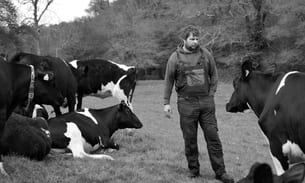
One beef and sheep farmer based in the Peak District told Farmer’s Weekly: “We cannot stand any more costs being landed at our door.” Another, based in Somerset, said: “This is yet another blow for farmers who are already in the doldrums … we try our best to keep slurry and manure out of rivers, not just pouring it in like water companies still do.”
The Department for Environment, Food and Rural Affairs (Defra) has yet to publish any costs associated with the possible cattle permits. But a consultation is expected to address any fees that could be levied on farmers.
James Wallace, CEO of the charity River Action, said: “[Extending permits to] dairy and beef units would give regulators the hard data they need to understand where cattle numbers in a [river] catchment have become unsustainable, and to target action where pollution is being driven.”
Lindsay Duncan, UK farming manager at World Animal Protection, a campaigning organisation, told us that the plans were “a much-needed step in the right direction to address [cattle farm’s] devastating impact on our local waterways and our environment”. But she cautioned: “We also need stricter criteria and audits and to make sure they are properly enforced.”
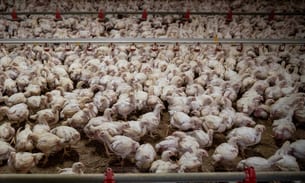
Under current rules, only the largest intensive poultry and pig farms are required to hold environmental permits, which are issued by the Environment Agency and its devolved counterparts. Each permit gives a strict set of conditions that limit farms’ environmental impacts and require regular inspections.
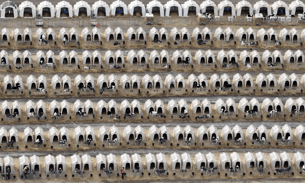
In a 2018 investigation, we discovered at least 10 vast outdoor cattle feedlots operating in Kent, Derbyshire, Nottinghamshire, Lincolnshire, Norfolk and Suffolk that had gone largely unnoticed. Some fattened up to 6,000 cattle a year but Defra admitted that it kept no records of how many feedlots there were nationwide. The revelations prompted calls from some MPs for the loophole to be closed.
 Industrial feedlots are increasingly widespread in UK farming
TBIJ / Guardian
Industrial feedlots are increasingly widespread in UK farming
TBIJ / Guardian
Seven years on, the government has confirmed its intention to consult on the issue. It told TBIJ that “cattle farms are a significant source of both water and air (via ammonia emissions) pollution” and that they would “explore fair and proportionate approaches that seek to maximise environmental benefits and minimise costs and administrative burden for farmers”.
Between January 2024 and February 2025, Environment Agency officials recorded 453 pollution incidents connected to dairy and beef farms in England, compared with 123 incidents for poultry and pig farms.
Farmers’ concerns about costs may be warranted. A recent farm profitability review warned that UK farming was effectively being priced out of survival. Its author, ex-NFU chief Minette Batters, called for a reset of supply-chain law to curb unfair practices. Research in 2022 found that UK farmers were sometimes left with less than a penny’s profit from the food items they produced.
The research examined a number of food staples – including beef burgers – and found that, after intermediaries and supermarkets had taken their cut, sometimes less than 1% of the profit remained for the farmer. For a standard pack of four burgers, meat processors sometimes made 10 times what the farmer did.
For beef farmers surviving on such low margins, any further red tape or costs from mandatory environmental permits will be especially unwelcome.
This story was updated on 20 May 2026 to clarify the timeframe of recorded pollution incidents
Lead image: Cattle in a barn Langport in Somerset. Credit: Matt Cardy / Getty Images
Reporter: Andrew Wasley
Environment editor: Rob Soutar
Impact producer: Grace Murray
Deputy editor: Chrissie Giles
Editor: Franz Wild
Production editor: Frankie Goodway
TBIJ has a number of funders, a full list of which can be found here. None of our funders have any influence over editorial decisions or output.
-
Area:
-
Subject: