Polish government inspects ‘ghost farms’ after our story
Early findings show that vast number of unlicensed farms should indeed hold environmental permits – as we had feared
Last month, we told you that almost half of Poland’s 2,000 largest poultry farms are running without the permits needed to control pollution and other environmental impacts.
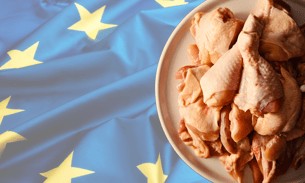
Poland is the biggest supplier of chicken to the UK and EU, meaning meat from these unlicensed and dirty farms could be finding its way to millions of consumers.
We also told you the story of 11-month-old Janek*, who was left fighting for his life after he contracted an antibiotic-resistant infection. He was one of several children who fell ill in the town of Czepielin, in eastern Poland, where residents suspected that the water supply had been contaminated by a nearby turkey farm.
Now, the Polish government has launched an investigation in response to our story.
Recommended Articles



To help understand the scale of the problem we uncovered, Poland’s Chief Inspectorate for Environmental Protection has requested all regional inspectors to verify their records on the number of industrial poultry farms that require a particular permit.
The checks are ongoing but what they have found so far is shocking: in Mazowieckie, the poultry-producing region at the heart of our investigation, 80% of the farms operating without a permit are big enough to require one.
Regional inspectors in Poland have the power to suspend operations at facilities that are meant to hold an integrated permit but don’t. It is unclear if this action will be taken.
A prominent UK industry body has called for assurances that meat from unlicensed Polish farms is not being imported into the UK. And campaigners have urged the EU to address the scandal.
Back in Poland, we understand that a politician will soon direct a parliamentary question on this issue to the Ministry of Climate and Environment.
Human costs
The farm in Czepielin had operated without a licence for years, was found to be stocking almost twice as many birds as it should and had been linked to E.coli infections among local children. Janek’s case was especially serious because the infection was found to be resistant to antibiotic treatment. Thankfully, he survived.
“What [this] terrifying case in Poland has confirmed is that the safeguards we have are already insufficient to keep up with current levels of [farming] intensification, let alone further increases,” said Isabel Paliotta from the European Environmental Bureau, an NGO.
“The EU has a duty to ensure our farming system is not something we need to worry about when drinking or breathing.”
Dr Milka Sokolović, director general of the European Public Health Alliance, a non-profit organisation, told us that the findings were a “public health issue hiding in plain sight”.
“When farms escape the permitting and inspection systems, pollution, excessive antimicrobial use and antimicrobial resistance also escape detection – sometimes for years, until a child ends up in hospital or a community discovers that its water has been contaminated.”
Poland’s poultry sector has been blighted by concerns over food safety in recent years, including the supply of meat containing drug-resistant salmonella. One major outbreak poisoned thousands of UK consumers and was linked to several deaths.
The British Poultry Council, an industry body, said it wanted reassurances that meat from Polish farms operating without a permit was not being sent to the UK.
Chief exec Richard Griffiths told us: “We do not want public trust in poultry meat eroded at a time when food security is a huge challenge, or UK production to be undermined by imports produced in systems that would not be allowed here.”
When we asked, the European Commission did not rule out the possibility of proceedings against Poland in response to our findings. “Member States must ensure that EU law is implemented, correctly and in a timely manner,” an EC spokesperson told us, adding that the Commission “may launch infringement procedures when this is not the case.”
* Name has been changed
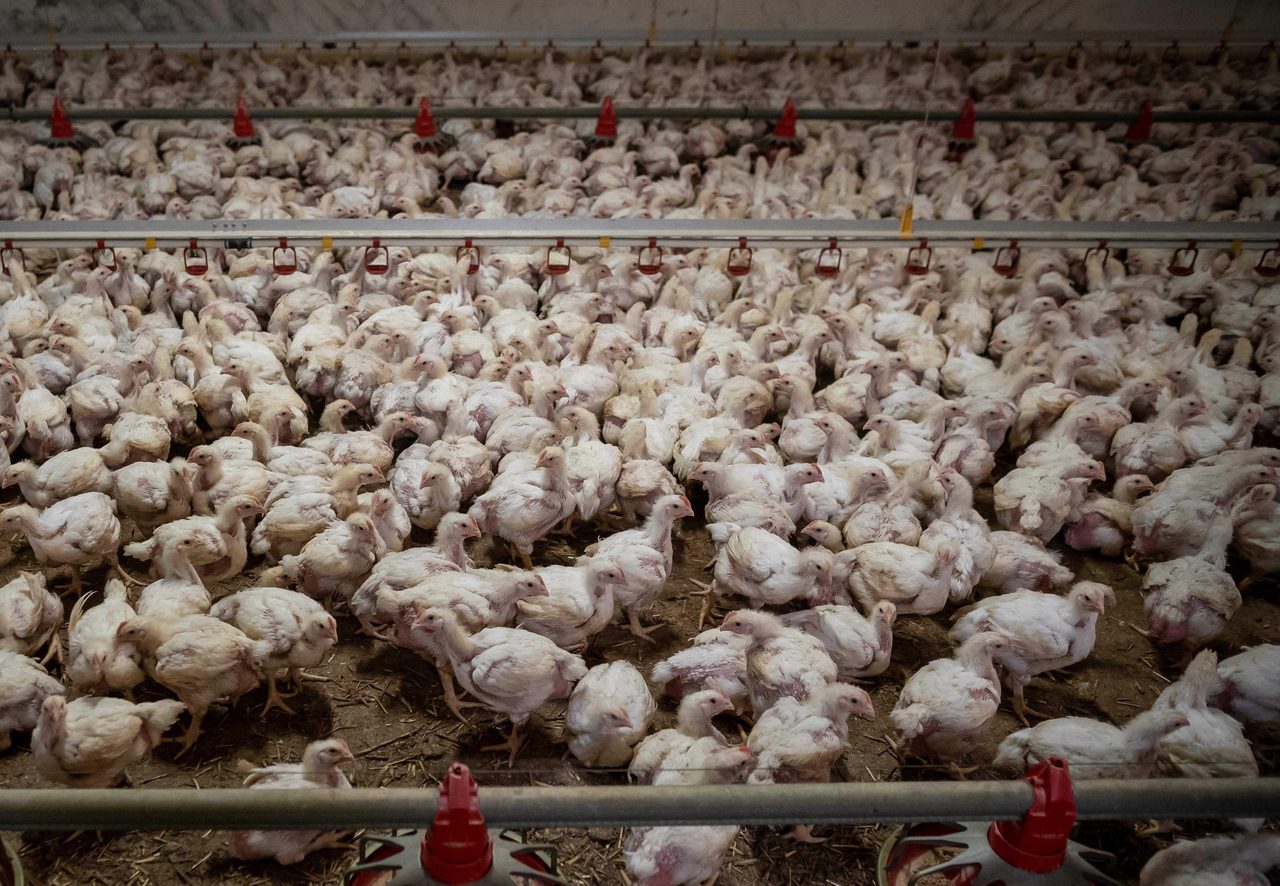
Header image: A Polish chicken farm
Credit: Wojtek Radwanski/AFP via Getty Images
Reporters: Andrew Wasley and Agata A Skrzypczyk
Environment editor: Robert Soutar
Impact producer: Grace Murray
Production editor: Alex Hess
Deputy editor: Chrissie Giles
Fact checker: Sasha Baker
The Bureau has a number of funders, a full list of which can be found here. None of our funders have any influence over editorial decisions or output.
-
Subject:
-
Area: