UK net migration is at its lowest in ten years – so why is the country fixated on it?
Hostile political rhetoric and harmful media coverage overshadows statistics that show migration is falling

UK net migration has fallen to its lowest point in more than ten years, prompting the question: why is the country so obsessed with immigration?
Figures published yesterday by the Office of National Statistics (ONS) show net migration fell to 171,000 in 2025, the lowest level since 2012, excluding the height of the Covid-19 pandemic. The number of people coming into the country fell 20% compared with the previous year.
Not that you’d know from day-to-day news coverage. Immigration dominates the UK political and media agenda.
Take the events of the last few weeks. Local elections held earlier this month resulted in significant gains for Reform UK, Nigel Farage’s anti-immigration party. As a result, Sir Keir Starmer, who once lamented that the UK risked becoming an “island of strangers”, is fighting to remain prime minister. His potential replacement, Greater Manchester’s mayor Andy Burnham, is said to support controversial changes to the immigration system that have been likened by some to Donald Trump’s draconian ICE crackdown in the US.
The proposals, put forward by the home secretary Shabana Mahmood, include doubling the length of time it takes some people to get settled status and stripping financial support from some asylum seekers. Burnham’s allies will point to a poll by YouGov this week that appears to suggest many Labour voters are supportive of Mahmood’s policies or want an even stricter approach.



Mahmood believes illegal migration is “tearing the country apart”. Such divisive language has become more common among politicians across the political spectrum. Earlier this year, an investigation by the Guardian analysing 100 years of parliamentary speeches found Labour and Conservative MPs are speaking in a more hostile way about immigration than at any time in the past century.
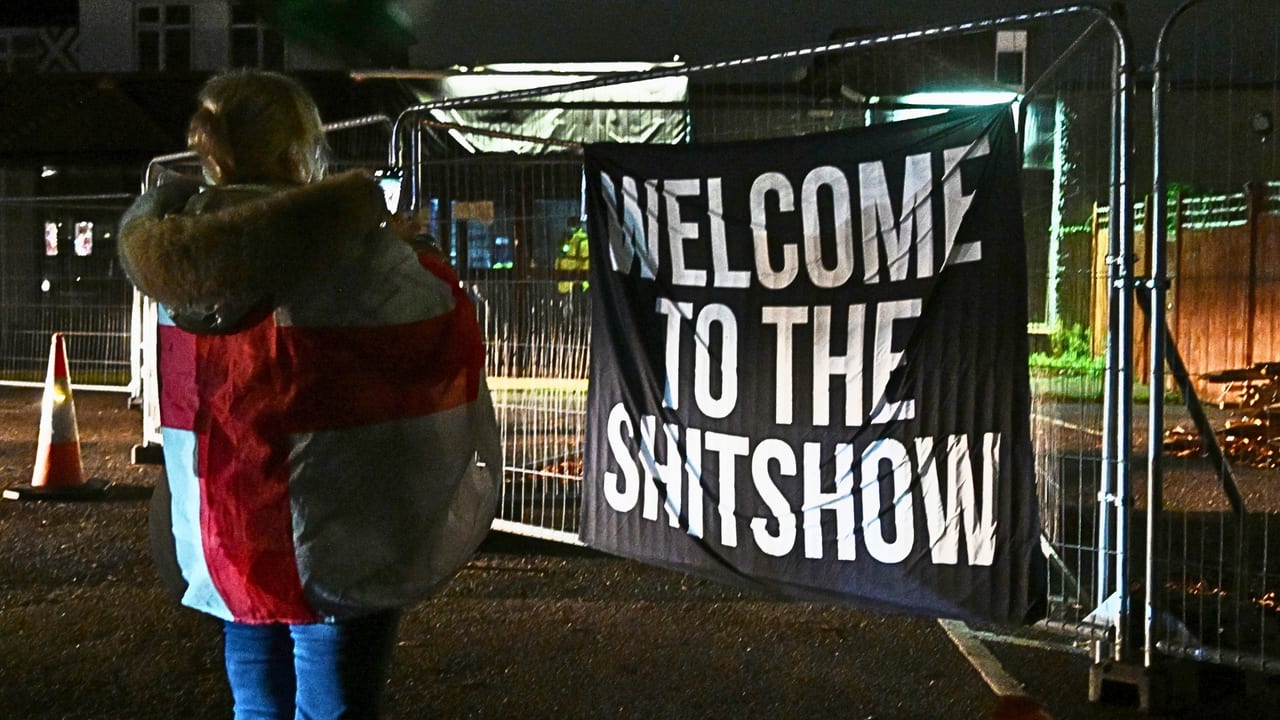
This rhetoric has done little to discourage anti-immigration protests, such as those outside hotels and military bases housing asylum seekers or the Unite the Kingdom rallies in central London. It has also contributed to intense media coverage of the issue, including right wing newspapers and broadcasters that have a long history of blaming the country’s problems on migrants and asylum seekers.
The weaponisation of violence against women and girls is a common theme of this type of coverage. Talk, the Rupert Murdoch owned online TV channel, is a repeat offender. Videos called “Safety For Girls in the UK Gets Worse By The Day!” and “We Are Importing Murderers and RAPISTS” are typical of its recent reporting. The less said about the comments under those videos, the better.
In 2023 the channel paid substantial damages to Migrants Organise after a presenter incorrectly claimed the charity funded illegal immigration. Media reports claiming foreign nationals are responsible for a disproportionate amount of sexual offences have been repeatedly debunked. Misleading coverage of immigration by parts of the UK media has been likened by one academic to “drinking from polluted water”.
Little wonder the sharp decline in net migration has had little impact on public perception. A study published this week by the thinktank British Future found most voters across the country believe net migration is rising.
“People do update their perceptions when circumstances change,” said Sunder Katwala, director of British Future, “but currently there is very little talk about how much immigration has decreased, and instead the public only really see a political and media focus on the risks and how it needs stricter control. In that context, it’s easy to see why we think immigration is still running at record levels.”
For Ian Dunt, an author and political reporter, this is a failure of journalism. “If journalists were doing their job properly, it would simply not be possible for the public to be labouring under this degree of ignorance,” he posted on Bluesky in response to the research.
According to academics at LSE, the major factor in immigration “becoming such a central societal and political issue” is an “extraordinarily wrong” view of the scale of people entering the country illegally. For example, the public believes that small boat crossings represent the largest share of all immigration, when in fact only 5% of total immigration in 2025 came by that route.
“The reality of immigration attitudes is they move around, reacting to both the reality and the rhetoric in the media and from politicians,” Bobby Duffy and Eliel Cohen wrote in a blog for LSE in November.
“A number of academic studies have shown how immigration concern is tightly related to media coverage and how it is framed. The current relentless focus on crimes committed by immigrants, particularly on social media platforms like X, is therefore a particular concern.”


How did the UK media cover these latest statistics? Outlets like the BBC and the Guardian reported the fall in net migration in fairly neutral terms, with the latter focusing on the potential boost that the figures could provide to Starmer’s government.
However, the Telegraph, an unapologetic supporter of Farage and stricter border controls, concentrated on the emigration figures and, in particular, the “young Britons turning their back on Starmer’s high-tax UK”.
James Frayne, a Telegraph columnist, dismissed the significance of falling net migration entirely. “Those who believe these figures will somehow help Starmer and or doom Nigel Farage are engaging in wishful thinking,” he wrote, adding: “Immigration is here to stay as an issue and Reform will campaign on it in Makerfield (where Burnham will contest a by-election next month) and across the country into next general election and beyond.”
Many readers posting in response to the article dismissed the data and instead spouted the usual far right poison about “invasions”, asylum seekers “gaming the system” and the “ethnic cleansing” of Britain.
To be fair, I’ll say that the Daily Mail, another newspaper famous for its anti-immigration outlook, reported the new statistics fairly straight, although it made sure to mention in the headline that the number of asylum seekers (slightly) increased in 2025. (However, to demonstrate that famous phrase about lies, damn lies and statistics, figures up to March 2026 showed a 12% fall in asylum claims).
Below the line, it was clear why falling migration has little impact on public opinion – commenters just didn’t believe it. “Strange thing about figures and statistics”, wrote one reader, “you can move them around to fit your narrative”. “The figures are false and manipulated to look good,” said another. “It’s true,” said one poster, “the figures have been verified by Santa Claus, Big Foot and the Loch Ness Monster.”
This sceptical response would not surprise Duffy and Cohen. In their blog, they’d written presciently: “Even if we could convey a perfect reality of immigration levels and effects to people, this would not negate concerns – this is an emotional reaction to how the country is changing more than a cold trade-off of pros and cons.
“Cause and effect run in both directions, where we overestimate what we worry about as much as the other way round: this means simplistic myth-busting will have less effect than you might expect, because it misdiagnoses what is partly an emotional and identity issue.”
We want to change the public’s perception of immigration and how the media covers it. To do this we’re launching a long-term project exposing how hate towards migrants is spread, who profits from it and how it affects people and society.
Fact-based reporting, supported by statistics like those released by the ONS, will play an important role in our work. But countering harmful narratives also requires positive stories told by people with lived experience of migration. If you want to be a part of this effort, please get in touch at garethdavies@tbij.com.
-
Area:
-
Subject: